Santa Rita winery: tours, tastings, Museo Andino and how to visit from Santiago
How to visit Viña Santa Rita in Alto Jahuel: the winery's own tours from CLP 31,000, the free Museo Andino, lunch at Doña Paula, Hotel Casa Real and getting there from Santiago.
Book the winery’s Selection Tour if you are making your own way to Santa Rita. It costs CLP 39,000 on the winery’s own site, takes 70 minutes and adds a wine-and-cheese pairing to the Classic visit, and the free Museo Andino next door fills the next hour. If you have no car, the Santa Rita Winery Day Tour with Lunch and Andean Museum below covers the bus, a guided visit, three wines, a three-course lunch and the museum: about 9 hours from central Santiago, from $207 per person and rated 4.8 from 420+ reviews on Viator.
Viña Santa Rita is in Alto Jahuel, near Buin, in the Maipo Valley. The winery puts the drive at about 45 minutes from Santiago; from the city centre, allow an hour. Domingo Fernández Concha founded it in 1880, and the estate adds a 19th-century park, a chapel, a museum of around 3,000 pre-Columbian and ethnographic objects, a restaurant in a colonial house and a 16-room hotel to the cellars and tasting room.
Plan on at least three hours at the estate, even if your tasting lasts only an hour, because the museum and the grounds are what set Santa Rita apart from a cellar-only visit. Winery prices below are in Chilean pesos as published in October 2026; tour prices are “from” figures per person in US dollars, and the live price is always on the booking page.
Check Availability
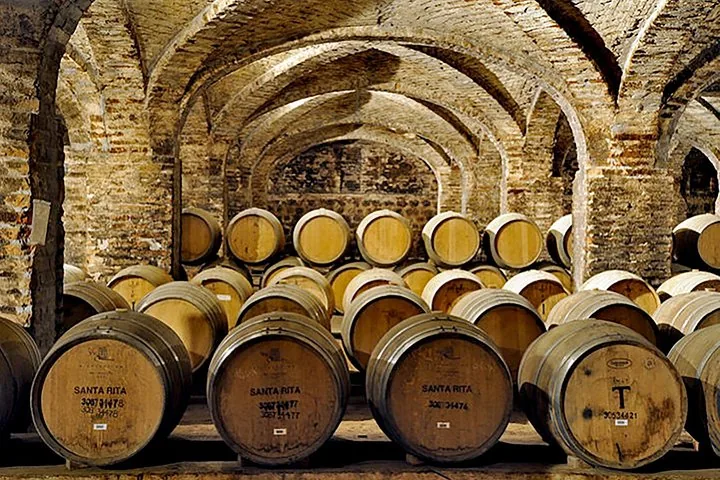
Santa Rita Winery Day Tour with Lunch and Andean Museum
- 4.8/5 (420+ reviews)
- 9 hours
- Free cancellation
- Operated by Turistik
Includes Round-trip transport for the group between your chosen Santiago departure point and Santa Rita · Guided tour of Santa …
You'll choose your date and complete the booking on Viator. Free cancellation up to 24 hours before departure.
Is Santa Rita worth visiting?
Yes, especially if you want more than a quick tasting. Santa Rita puts wine, history, gardens, a museum and a proper restaurant on one estate, so a mixed group gets something each. One of you can spend the tasting on Cabernet Sauvignon while another finds the museum and the old house the best part of the day.
It suits you less if you want a modern boutique winery or a quiet hour with the winemaker. Santa Rita is one of Chile’s large producers, and the visit runs on set departures with groups.
| If you’re looking for… | Our assessment |
|---|---|
| Your first winery visit in Chile | Excellent choice |
| Wine, history and culture together | Particularly strong |
| A winery with a proper restaurant | Excellent choice |
| A short tasting without spending all day | Good choice |
| Premium wine tasting | Good with an upgraded tour |
| A half-day trip from Santiago | Very suitable |
| A family-friendly cultural outing | Possible, with tasting restrictions |
| A modern, boutique winery | Other estates may fit better |
| Several wineries in one day | Possible with careful transport planning |
Other Experiences
Other experiences you might enjoy
More wine tours from Santiago, each with its own page and booking link.


Santa Rita winery at a glance
| Feature | Details |
|---|---|
| Official name | Viña Santa Rita |
| Location | Camino Padre Hurtado 695, Alto Jahuel, Buin, Maipo Valley |
| Distance from Santiago | About 45 minutes by car by the winery’s estimate; allow an hour from the centre |
| Founded | 1880 |
| Known for | Cabernet Sauvignon, the historic estate, the Santa Rita 120 range |
| Winery tours | CLP 31,000 to CLP 65,000 per adult |
| Tour length | 60 to 90 minutes |
| Museo Andino | Free; Tuesday to Sunday, 10:30 am to 5 pm |
| Restaurants | Doña Paula and Café La Panadería |
| Accommodation | Hotel Casa Real, inside the estate |
| Tour languages | Spanish, English and Portuguese |
| Best for | First-time visitors, couples, history lovers and wine enthusiasts |
Prices, hours and experiences come from the winery’s published visitor information, which can change.
Santa Rita winery tours and tasting prices
Santa Rita sells more than one standard tour. Its published experiences run from an introductory tasting to cheese pairings, a carriage ride and a wine-blending session.
Official published prices, checked October 2026:
| Experience | Price per person | Length | Best for |
|---|---|---|---|
| Classic Tour | CLP 31,000 | 60 min | First-timers |
| Selection Tour | CLP 39,000 | 70 min | Wine and cheese |
| Premium Tour | CLP 55,000 | 90 min | A fuller winery visit |
| Carménère Tour | CLP 65,000 | 90 min | Carriage ride and tasting |
| Winemaker Experience | CLP 55,000 | 90 min | Making your own blend |
| Horse-drawn carriage ride | CLP 35,000 | 50 min | Estate scenery |
| Pedal Bar | CLP 40,000 | 60 min | Groups of friends |
| Vineyard picnic | CLP 25,000 | Varies | A relaxed food-and-wine outing |
These are prices for activities at the winery, not for a tour with transport from Santiago. Check the exact wines, pours and inclusions when you book.
If you would rather book through Viator, our pick is the Santa Rita Winery Premium Tour: a 90-minute guided visit of Centenary Park and the cellars with a tasting, snacks, a gift glass and unguided time in the Museo Andino, from $70 per person and rated 4.6 from 220+ reviews. You meet at the winery; no transport is included.
1. Classic Tour, for first-time visitors
The Classic Tour is the simplest introduction to Santa Rita. Over about an hour, a guide covers the estate’s history and how the wine is made, then leads a tasting. A souvenir glass is included.
Choose it if you want to see the winery without a long or expensive activity, particularly if you also plan to visit the Museo Andino or have lunch. At CLP 31,000, it is the cheapest of the winery’s guided wine tours.
2. Selection Tour, the best value for tasting
For CLP 8,000 more than the Classic Tour, the Selection Tour adds a guided wine-and-cheese pairing. It runs about 70 minutes and suits visitors who want to pay closer attention to the wines.
We would choose it because the extra cost is small, and the pairing makes the tasting more engaging without taking much more time. For many visitors it sits at the right point between the introductory tour and the dearer ones.
3. Premium Tour, for a fuller winery visit
The Premium Tour lasts about 90 minutes. It includes the historic winery route and a visit to Parque Centenario, with an upgraded tasting and a souvenir. The winery’s package information describes wine-and-cheese pairings; confirm the current gift and pairing details before you book.
Choose it if Santa Rita is the main purpose of your day and you want more time with the estate’s wines and its historic park.
4. Carménère Tour, for a special occasion
The Carménère Tour adds a horse-drawn carriage ride to the guided visit and paired tasting. At CLP 65,000 per person, it is the most expensive tasting package the winery currently publishes.
Choose it for an anniversary or a romantic afternoon, if you would enjoy the carriage ride as much as the wine.
5. Winemaker Experience, the hands-on choice
In this session of about 90 minutes you make your own blend and bottle it, instead of only tasting finished wines. The published description includes the bottle you create and an apron-style souvenir.
Choose it if you have already done a conventional winery tour, or you want to take part as well as listen.
6. Horse-drawn carriage, Pedal Bar and picnic
These activities replace a conventional cellar tour. The carriage ride takes in the estate’s gardens, chapel and historic buildings. The Pedal Bar is a sociable ride through the historic grounds with a tasting. The picnic is a slow meal among the vines.
Not every one of them includes a guided wine tasting. Check whether the carriage ride or picnic includes the tasting you want.
Santa Rita runs its regular experiences in English, Spanish and Portuguese. Times and languages vary by session, so book the exact departure instead of assuming every one is offered in your language.
The story behind Santa Rita: wine and Chilean independence
History is a large part of Santa Rita’s appeal. Chilean businessman Domingo Fernández Concha formally founded the winery in 1880 and brought French grape varieties and winemaking expertise to the Maipo Valley. The estate itself is older.
Why is Santa Rita’s best-known wine called 120?
The number 120 refers to a group of Chilean independence fighters who, according to the estate’s own account, were sheltered at the property by Paula Jaraquemada. The story belongs to the aftermath of the Battle of Cancha Rayada in 1818.
Today the historic house linked to this story holds Restaurant Doña Paula, and the Santa Rita 120 range commemorates the patriots. It turns a supermarket wine label into a piece of national history.
The estate grew into one of Chile’s important wine producers in the late 19th century. The original residence, gardens, chapel and cellars now form a heritage landscape, with major parts protected as a Chilean Historic Monument. French landscape architect Guillaume Renner designed the park, and the main residence is now Hotel Casa Real.
Look at the historic cellars and old estate buildings for how a farm became one of Chile’s big wineries.
Museo Andino: Santa Rita’s unexpected highlight
One of the strongest reasons to visit Santa Rita has nothing to do with wine. Set among the vineyards, the Museo Andino covers the archaeological and ethnographic heritage of Chile and the Americas.
The museum occupies a modern building of about 1,500 square metres and holds around 3,000 objects from pre-Columbian societies and later cultural traditions. Ricardo Claro and María Luisa Vial de Claro assembled the collection, and the Fundación Claro Vial opened it to the public in 2006.
The permanent exhibitions cover different cultures that lived in what is now Chile. A separate space hosts temporary exhibitions, often of contemporary art.
What can you see at the Museo Andino?
Expect ceramics, textiles, ornaments and other archaeological and ethnographic pieces, showing how different societies expressed their beliefs, skills and identities and how they lived with their surroundings. The museum gives you a grounding in Chile’s cultural history that goes far beyond its wine industry.
That makes it particularly valuable if you have spent most of your Santiago stay in modern neighbourhoods, restaurants and city sights.
Museo Andino visitor information
| Question | Answer |
|---|---|
| Is entry free? | Yes |
| Do you need a winery tour? | No |
| Do you need to book the museum ahead? | No |
| Opening days | Tuesday to Sunday |
| Published hours | 10:30 am to 5 pm |
| Time to allow | 45 to 75 minutes |
| Can children visit? | Yes |
| Can you visit it on its own? | Yes, especially alongside the rest of the estate |
The museum’s own page gives 10:30 am to 5 pm, while the winery’s FAQ gives a 10 am opening. Confirm the hours before a tight itinerary, particularly around public holidays, and remember the museum is closed on Mondays.
Give the museum at least 45 minutes, and preferably an hour, instead of treating it as a quick stop after the tasting. If you enjoy history and museums, it may be the best part of the trip. The winery’s page on the Museo Andino at Viña Santa Rita has the current details; the museum’s phone number is +56 2 2362 2524.
Parque Centenario: historic gardens, chapel and vineyards
Santa Rita feels different from a modern, purpose-built wine centre. Its historic grounds have formal gardens, mature trees, paths, water features and the architecture of a wealthy 19th-century Chilean estate.
The park covers about 40 hectares, although visitors cannot walk all of it freely. Highlights include the neo-Gothic chapel, the historic residence that now holds Hotel Casa Real, the gardens and features from the estate’s older recreation grounds.
Some guided experiences include Parque Centenario, while others stay with the winery and tasting rooms. The grounds are part of the estate’s protected historic setting.
Is Santa Rita good for photography?
Yes, particularly if you like architecture, gardens and vineyard landscapes more than sweeping mountain views. Subjects include the chapel’s pointed tower, rows of vines, the old cellars and the contrast between the gardens and the foothills.
Spring brings new growth on the vines and flowers in the gardens, and autumn turns the leaves. Ask your guide which garden areas day visitors can use: some belong to Hotel Casa Real or close for private events.
What wines should you taste at Santa Rita?
A visit to Santa Rita shows why the Maipo Valley is one of Chile’s best-known red-wine regions. The estate is the obvious stop if you are curious about Cabernet Sauvignon, but the wider portfolio goes well beyond one grape or one valley. Our guide to Chilean Cabernet Sauvignon covers the grape in more depth.
Cabernet Sauvignon
This is the classic choice for Maipo wine. Expect blackcurrant, black cherry, cedar, tobacco and firm tannins. Wines from warmer, lower vineyards and cooler foothill sites can balance ripeness, freshness and concentration differently.
If you have only tried inexpensive Chilean Cabernet before, ask whether your tasting includes an upgraded wine that shows what premium Maipo fruit can do.
Carménère
Carménère is one of the grapes most closely tied to modern Chilean wine. It came from Bordeaux and gained its importance in Chile after vines long mistaken for Merlot were correctly identified in the 1990s.
Typical flavours include dark berries, plum, spice and sometimes a herbal or green-pepper note. Comparing it with Cabernet Sauvignon is an easy introduction to two of Chile’s main reds; our guide to the best Chilean red wines sets them side by side.
Merlot
Merlot is another approachable red, often with softer tannins than Cabernet Sauvignon and plum and red-fruit flavours. A tasting that contrasts Merlot and Cabernet helps beginners notice how grapes differ in texture as well as flavour.
Sauvignon Blanc and Chardonnay
Santa Rita also makes white wines from grapes grown in suitable Chilean regions. Depending on your tasting, you might meet a citrus-led Sauvignon Blanc or a Chardonnay with orchard fruit, minerality or oak.
A wine poured at Santa Rita is not necessarily made from grapes grown at Alto Jahuel. Large Chilean producers often source fruit from several regions.
Which Santa Rita labels are good to know?
| Wine range | Why it matters |
|---|---|
| Santa Rita 120 | The widely sold range named after the independence story |
| Medalla Real | An established higher tier, good for exploring more serious varietal wines |
| Floresta | A premium range tied to distinctive vineyard sites and winemaking |
| Casa Real Reserva Especial | A flagship Cabernet Sauvignon closely linked to the Alto Jahuel estate |
The wines poured depend on your package, stock and the winery’s current tasting programme. Don’t assume the Premium Tour includes Casa Real.
One good question for your guide: how does Cabernet Sauvignon from Alto Jahuel compare with Cabernet from other parts of the Maipo Valley? The answer ties what is in your glass to the climate, soils and geography right around you.
Restaurant Doña Paula: is lunch at the winery worth it?
If you enjoy food with your wine, Restaurant Doña Paula is a major reason to choose Santa Rita over a shorter cellar-only trip, and it is one of the best winery restaurants near Santiago. It occupies a historic house linked to Paula Jaraquemada, with colonial-style architecture, high ceilings, antique furniture and traditional details, and it is part of the story behind the 120 range.
The current menu combines Chilean ingredients with international techniques, with seafood, meat and vegetable dishes. The winery publishes the menu online.
Restaurant Doña Paula prices
Examples from the published à la carte menu:
| Dish | Listed price |
|---|---|
| Soup of the day | CLP 10,000 |
| Mushroom and vegetable ceviche | CLP 13,000 |
| Tuna tartare | CLP 14,000 |
| Beef carpaccio | CLP 15,000 |
| Seared scallops | CLP 21,000 |
| Seafood platter | CLP 23,000 |
These are starter prices. A full lunch with a main course, dessert, drinks and service costs more, so treat Doña Paula as a special vineyard lunch, not a cheap stop.
Opening hours and reservations
The winery’s visitor FAQ lists Restaurant Doña Paula as open daily from noon to 4 pm and recommends booking ahead, especially at weekends.
If you combine the restaurant with a guided tour, reserve the table and the tour separately unless your package includes lunch. The menu is on the winery’s Restaurant Doña Paula page.
Café La Panadería, the casual alternative
If you don’t want a long lunch, Café La Panadería in the estate’s former bakery serves coffee, drinks and lighter meals, and keeps traces of its working past. The building also displays historic horse-drawn railway carriages that once ran between the estate and Buin. The winery lists the café as open daily through the daytime visitor hours.
Choose Doña Paula for a slow, memorable lunch, and La Panadería for a shorter visit or a smaller budget.
How to get to Santa Rita winery from Santiago
Santa Rita is at Camino Padre Hurtado 695, Alto Jahuel, Buin, south of central Santiago. The winery describes it as about 45 minutes from Santiago, but from the city centre allow around an hour, and more in heavy traffic.
Option 1: a guided tour with transport, the easiest for most visitors
For a first visit, a tour from Santiago that includes transport is usually simplest. You avoid unfamiliar roads, you don’t have to arrange the ride back, and nobody has to drive after the tasting. The options include shared day tours, private tours and combinations with other Maipo wineries; they are compared further down.
Best for travellers without a rental car, couples who want to taste several wines and anyone who wants an easy day.
Option 2: drive yourself, for flexibility
You can reach Santa Rita on the main highways south of Santiago, including Ruta 5 Sur and the roads linking with Américo Vespucio. The estate publishes directions for private cars and puts the drive from central Santiago at about an hour.
Driving lets you arrive early, linger over lunch or combine the winery with other places nearby. But whoever drives should not drink before returning to Santiago, because Chile has strict drink-driving laws. If you want to taste properly, bring a sober driver or use organised transport.
Option 3: Metro and shared taxi, a lesser-known alternative
Santa Rita’s own transport guidance describes a shared taxi, a colectivo, leaving near Los Héroes Metro station. The winery names route 5010, departing near Alameda and Almirante Barroso, with an indicative fare of CLP 20,000 for one to four passengers and a journey of around 40 minutes from Los Héroes. For the other ways to reach the wineries, see our Santiago wine tour prices and planning guide.
The listed operating days and hours are more limited than the winery’s own, and taxi routes and fares can change. Check that route 5010 is running, what it costs and how you get back before you rely on it, and don’t count on an evening return. The winery’s directions to Viña Santa Rita are the best starting point.
Transport compared
| Transport | Typical time each way | Main advantage | Main drawback |
|---|---|---|---|
| Guided tour with pickup | About 45 to 90 minutes | No transport planning | Fixed itinerary |
| Rental car | About 45 to 75 minutes | Flexible schedule | Needs a sober driver |
| Private driver | About 45 to 75 minutes | Flexibility without driving | Higher overall cost |
| Colectivo | Variable; the winery’s estimate is about 40 minutes from Los Héroes | Possibly cheaper | Availability and the ride back |
| Public transport with connections | Variable | Potentially economical | Less straightforward |
Times are planning estimates, not live journey times.
Useful navigation details:
- Official address: Camino Padre Hurtado 695, Alto Jahuel, Buin
- GPS: -33.724054, -70.676594
- Open Santa Rita winery in Google Maps
Santa Rita winery tours from Santiago
Visitors need different packages, so compare the format before the lowest headline price. These are the listings we would book, with their ratings as shown on Viator in October 2026.
Santa Rita for the day with lunch
Best for first-time visitors without a car, and couples who want an unhurried day. The Santa Rita day tour with lunch is run by Turistik on a shared bus from five central Santiago departure points (no hotel pickup) and stays at one estate: a guided visit of the park, vineyards and cellars, a tasting of two Reserva wines and one Gran Reserva, a three-course lunch, a bicycle among the vines and time in the Andean Museum. It takes about 9 hours, costs from $207 per person and is rated 4.8 from 420+ reviews. Our breakdown of the Santa Rita day tour lists the departure points and times.
The Premium tasting, if you have your own transport
Best for independent travellers with a car or driver. The Santa Rita Premium Tour ticket is the winery visit only: 90 minutes with the guide, Centenary Park, a tasting with snacks and a gift glass, plus the Museo Andino on your own. It is from $70 per person and rated 4.6 from 220+ reviews, and it starts and ends at Santa Rita itself.
A private day with Santa Rita and a second winery
Best for couples and small groups who want their own timetable. The private Aquitania and Santa Rita day picks you up at your Santiago accommodation and pairs a boutique tasting at Aquitania with a premium tour at Santa Rita, the Museo Andino and a Chilean lunch, over 7 to 8 hours. It is from $290 per person and rated 5.0 from 15 reviews, a small count, so read them before booking. For three of the Maipo’s best-known names in one day, the private Concha y Toro, Santa Rita and Undurraga tour includes lunch with Reserva wine at Doña Paula and the museum, over about 10 hours, from $636 per person and rated 5.0 from 32 reviews.
Shared half-day tours to Santa Rita also exist, but the Viator one we checked is rated 3.5 out of 5 from 33 reviews, so we have left it out. For more formats with transport, see our Maipo Valley wine tours comparison. Check live availability, the final price, cancellation terms and pickup points for your date on the booking page.
What to check before booking a Santa Rita tour
Some listings are winery tickets only, and others are full days from Santiago. Before you book, check:
- Transport: does the tour include hotel pickup, a central meeting point or no transfer at all?
- Tasting level: is it the Classic, Selection, Premium or another tasting?
- Wine inclusions: how many wines are poured, and is there cheese or a snack?
- Museum time: is the Museo Andino included, and is it open on your day (it closes on Mondays)?
- Lunch: is a restaurant meal included, or available at extra cost?
- Language: will the winery guide speak your language?
- Length: is the advertised time spent at the winery, or the whole round trip from Santiago?
- Cancellation: what is the deadline and the refund policy?
A cheap admission ticket can turn into a costly day once you add separate transport. A dearer tour can be good value if it includes a driver, hotel pickup and a fuller tasting. Without a car in Santiago, start with the tours that include transport; with a car or driver already arranged, compare the winery’s own prices first.
Three Santa Rita itineraries
The estate has enough to fill different days, depending on your interests and time.
Itinerary 1: Santa Rita in half a day
Best for first-time visitors short on time.
| Approximate time | Activity |
|---|---|
| 9:00 am | Leave Santiago |
| 10:00 am | Arrive and check in |
| 10:30 am | Guided winery tour and tasting |
| Noon | Gardens or wine shop |
| 12:30 pm | Head back to Santiago |
This is the most efficient plan if tasting is your priority. You get the estate’s history and wines without giving up a whole day of sightseeing. You may not have time for the Museo Andino, and on a Monday it is closed anyway.
Itinerary 2: wine, history and a vineyard lunch
Best for most visitors, and our favourite.
| Approximate time | Activity |
|---|---|
| 9:30 am | Leave Santiago |
| 10:30 am | Museo Andino |
| Noon | Lunch at Restaurant Doña Paula |
| 2:30 pm | Classic or Selection winery tour |
| 3:45 pm | Wine shop and open garden areas |
| 4:30 pm | Leave for Santiago |
This plan gives each of Santa Rita’s main attractions enough time: a museum visit, a proper lunch and a tasting, without racing through the winery. It suits couples, first-time visitors to Chile and anyone who likes to mix sightseeing with food.
The times are illustrative, not confirmed departures or reservations; they broadly follow one of the sample programmes the winery itself suggests.
Itinerary 3: the premium Santa Rita day
Best for special occasions and keen wine lovers. Start with a Premium or Carménère tour, then the Museo Andino and a long lunch at Doña Paula. Leave time for the gardens, the wine shop and the historic buildings open to visitors.
If your budget allows and you would rather not return to Santiago, spend the night at Hotel Casa Real. That turns the outing into a short wine-country break.
Hotel Casa Real: can you stay overnight at Santa Rita?
Yes. Santa Rita has a boutique hotel in its founder’s historic residence. Hotel Casa Real has 16 traditionally furnished rooms that look over the gardens or the inner courtyard.
The hotel pairs period architecture with modern comforts: a swimming pool, a gym, the gardens and wine-focused dining. Rooms are split into Casa Real Rooms and larger Casa Real Suites, and the hotel sells packages that can include meals, winery experiences and other activities.
Is staying overnight worth it?
With only a few days in Santiago, a day trip is enough. Hotel Casa Real makes sense for an anniversary, a slow end to a trip to Chile, or a night in a historic house among the vines, if you like a destination hotel more than another night in the city.
Stay for the estate and the hotel themselves; Santa Rita is close enough to Santiago for a day visit. The winery’s Hotel Casa Real page has the room types and packages.
Best time to visit Santa Rita winery
You can visit all year, but the estate changes with the seasons.
| Season | Months | What to expect |
|---|---|---|
| Spring | September to November | Green vines, gardens in flower, usually pleasant weather |
| Summer | December to February | Warm to hot days, long evenings, outdoor dining |
| Harvest | Usually February to April | Picking and winemaking, depending on the grape and the year |
| Autumn | March to May | Harvest early in the season and changing leaf colours |
| Winter | June to August | Cooler days, possible rain and quieter grounds |
Is the grape harvest a good time to visit?
Yes. Harvest is an especially interesting time to see how Chilean wine is made. Picking dates vary with the weather, the vineyard, the grape and the style of wine, though, so a March visit does not guarantee you will see an active harvest. If watching the winemaking matters to you, contact Santa Rita before booking and ask whether your tour will include any harvest activity.
What is the best month?
For pleasant weather, gardens and vineyard scenery together, October to November and March to April are the most attractive months. If the tour and the museum are your main interest, any month works.
When should you book?
Plan further ahead for weekends and public holidays, particularly if you are pairing a tasting with a restaurant booking. Santa Rita recommends reserving tours in advance, although it is not always compulsory.
Santa Rita, Concha y Toro or Undurraga?
Santa Rita is not the only winery within easy reach in the Maipo Valley, and the right one depends on what you want from the day.
| Winery | Main strength | Best for |
|---|---|---|
| Santa Rita | Historic estate, museum, gardens and dining | A full cultural day trip |
| Concha y Toro | Famous brand and the Casillero del Diablo story | An iconic Chilean winery |
| Undurraga | Long winemaking history and classic guided tastings | A traditional winery tour |
| Cousiño Macul | A winery inside metropolitan Santiago with several tasting formats | Easy access from the city |
Choose Santa Rita if…
You want a full outing with heritage, gardens, a museum and a long lunch as well as the wine.
Choose Concha y Toro if…
You already drink its wines at home and want to see the estate behind Casillero del Diablo. Our Concha y Toro winery tour guide covers its tickets and tastings.
Choose Undurraga if…
You mainly want an established Chilean winery, its history and a guided tasting, without a large cultural complex around it. Our Undurraga winery visit guide compares Santa Rita and Undurraga in more detail.
Choose Cousiño Macul if…
You are short on time and want a winery close to the city. The Cousiño Macul Traditional Wine Tour in English is from $27 and rated 4.9 from 410+ reviews on Viator. Our guide to Cousiño Macul winery tours compares the other formats.
Santa Rita is the most versatile of the four if you care about the whole visit. For the wine alone, the tasting package you choose matters more than the size or fame of the estate.
Related guides: best wineries near Santiago, Maipo Valley wine tours, Concha y Toro winery tour and which wine tour from Santiago is right for you.
Practical tips before you visit
Arrive early
Santa Rita asks you to reach the tourism reception about 20 minutes before your tour. Allow time to park, check in and walk to the meeting point.
Wear comfortable shoes
You may spend time on paths, in gardens and inside old estate buildings. Comfortable walking shoes beat smart ones, even if you have booked a nice lunch.
Dress for the weather
Santiago summers can be hot, and the sunny outdoor parts call for a hat, sunglasses, water and sunscreen. In winter, bring a jacket and expect cooler days or rain.
Check accessibility in advance
Santa Rita reports wheelchair-accessible tour arrangements, ramps and a free electric minibus between the car park and tourism reception. Some activities, such as the carriage ride, and some historic spaces may have different access, so contact the winery about your needs before paying.
Visiting with children
Children can visit the estate and the museum, and the winery publishes child prices for certain tours. Alcoholic tastings are for adults only. Some tour operators describe non-alcoholic options for younger visitors; confirm them directly before booking.
Can you bring pets?
The winery’s FAQ says pets are not admitted, apart from assistance animals.
Payment
The tourism centre takes credit cards, debit cards and cash in Chilean pesos. According to its FAQ, it does not accept foreign currency in cash.
Can you leave a backpack?
The estate has free lockers big enough for backpacks, with keys from tourism reception. These details come from Santa Rita’s visitor FAQ.
Frequently asked questions
Where is Santa Rita winery?
Viña Santa Rita is in Alto Jahuel, Buin, in Chile’s Maipo Valley, south of Santiago. Its address is Camino Padre Hurtado 695.
How far is Santa Rita from Santiago?
The winery advertises about 45 minutes. From central Santiago, allow an hour or more, depending on traffic and where you start.
How much does a Santa Rita winery tour cost?
The Classic Tour costs CLP 31,000 per person on the winery’s site. The Selection Tour costs CLP 39,000, the Premium Tour CLP 55,000 and the Carménère Tour CLP 65,000. Transport from Santiago is extra unless you book a tour that includes it, such as the Santa Rita day tour with lunch from $207.
Can you visit Santa Rita without a tour?
Yes. The Museo Andino, the restaurants and the wine shop are open to visitors without a tour. The cellars, some parts of the park and the tastings depend on a booked experience.
Is the Museo Andino free?
Yes. Entry is free with no reservation, and the museum normally opens Tuesday to Sunday.
How long does a Santa Rita winery tour take?
Guided tastings last from one hour to 90 minutes. A full visit with the museum, the gardens and lunch fills four to five hours at the estate.
Does Santa Rita offer tours in English?
Yes. The winery runs guided experiences in English, Spanish and Portuguese. Check that your language is offered on your date and departure.
Can you have lunch at Santa Rita?
Yes. Restaurant Doña Paula is the more formal choice, and Café La Panadería is the casual one. The estate also sells a vineyard picnic.
Does Santa Rita offer tours with hotel pickup?
The winery’s own packages do not include transport from Santiago. Tour operators sell days out with transport, such as the private Aquitania and Santa Rita day with pickup at your accommodation, from $290.
Is Santa Rita better than Concha y Toro?
They suit different visitors. Santa Rita stands out for its historic gardens, the free archaeological museum and its restaurants. Concha y Toro suits visitors drawn to a world-famous brand and Casillero del Diablo. Both make good Maipo Valley day trips.
What is Santa Rita 120 wine?
Santa Rita 120 is a range named after 120 Chilean independence fighters who, the estate says, were sheltered there by Paula Jaraquemada.
Can you stay at Santa Rita winery?
Yes. Hotel Casa Real is a 16-room boutique hotel in the estate’s historic residence.
Is Santa Rita good for people who don’t drink wine?
Yes. The Museo Andino, the architecture, the gardens and the restaurants make the visit worthwhile beyond the tasting. Check access to the areas you want to see, and book a cultural or food-led experience.
Should you book Santa Rita?
Santa Rita is a good choice if you want your first Chilean winery visit to feel like a proper day out, not an hour-long tasting. No single attraction carries it. You get historic cellars, Maipo wines, landscaped gardens, a surprisingly large museum and a restaurant in the house tied to Chile’s independence story, and from Santiago that justifies half a day, preferably more.
For independent travellers, the Selection Tour plus the free Museo Andino is the best value. Without transport, the Santa Rita day tour with lunch is the easier way to go. If you have the time and budget, book a table at Doña Paula, because lunch there makes the day far more memorable than a tasting alone.
Check the winery’s official visitor information for tours, prices and booking contacts, and the Santa Rita restaurants page for Doña Paula and La Panadería, then confirm your date before you travel, because schedules and prices can change.
Spend a Day in Chile's Wine Country
Free cancellation up to 24 hours before. Santa Rita Winery Day Tour with Lunch and Andean Museum from $207 per person.
Check Availability & Book